People with a typical brain can look at a messy room and intuitively break the cleaning process down into steps. People with ADHD brain struggle profoundly with this because planning, prioritizing, and executing tasks feels completely different to them. As a professional organizer, I see how standard organizing advice sets families with ADHD up to fail. The secret to an organized kitchen is about removing the friction and here is how I’d set up your kitchen to work with ADHD brain, rather than against it.
The “Just One Thing” Trick for Washing Dishes
Starting a chore requires a massive surge of energy. When you look at a sink full of dirty dishes, you don’t just see plates, you see a mountain of tasks that feel impossible to tackle. The overwhelming nature of deciding where to begin often results in physical paralysis or complete task avoidance. To break the cycle, use the “Just One Thing” trick. Tell yourself you are only going to unload the bottom rack of the dishwasher, or only wash the forks. Once you start, the feeling of completing that tiny micro-task almost always provides the momentum needed to finish the rest.
Broad Categories Instead of Specific Labels
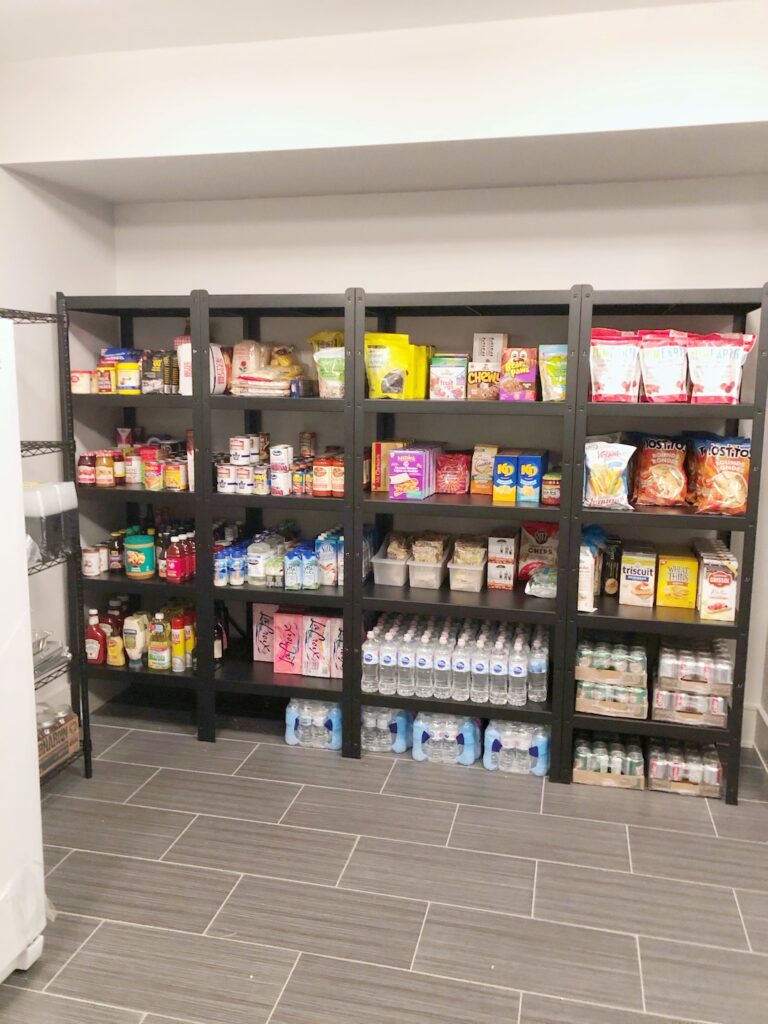
Putting away groceries or organizing a pantry usually requires grouping similar items together. However, the ADHD brain often hyper-focuses on details, making sorting feel completely exhausting. Ditch the hyper-specific labels and instead, use broad, intuitive categories like “Salty,” “Sweet,” “Carbs,” or “Morning.” If it’s a breakfast item, just toss it into the morning bin.
A Catch-All Basket for Daily Clutter
If you struggle with planning, you might find yourself picking up an item, not knowing exactly where it goes, and just putting it down somewhere else. You expend energy without actually reducing the mess. Keep a designated, aesthetically pleasing basket on the kitchen counter for items that don’t have a home yet or belong in another room. It contains the visual clutter and gives you a single, frictionless place to dump items until you have the energy to put them away properly.
Clear Storage So Nothing Disappears
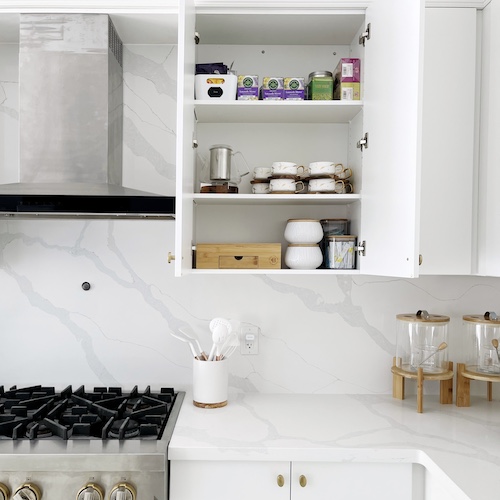
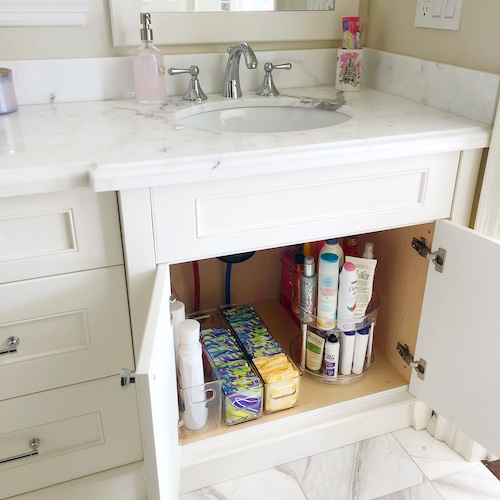
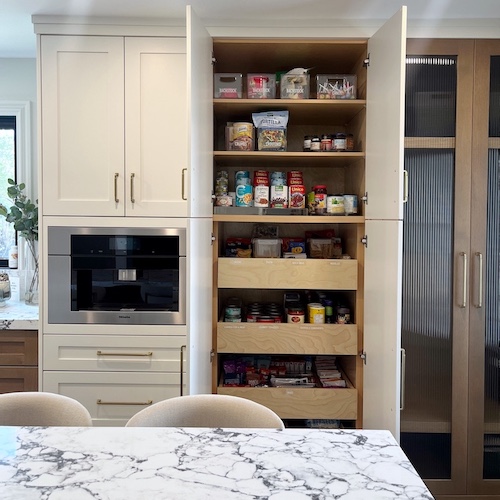
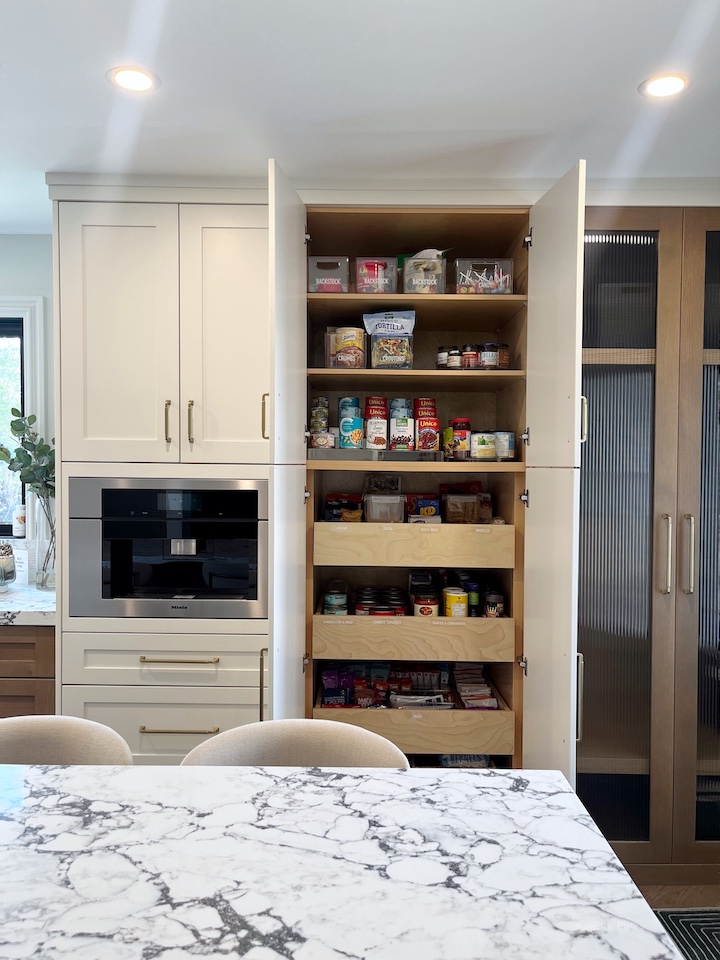
If an item is placed in an opaque bin, or tucked behind something else in the pantry, it essentially ceases to exist in your mind. Swap your opaque containers for clear acrylic bins. When you sort your groceries into those broad categories, make sure you can see exactly what is inside. It is also crucial to avoid putting everyday items in hard-to-reach areas, so keep things off the highest shelves and never hide ingredients behind other boxes.
Bounded Trays for Important Reminders
Because you know you will forget things that are hidden, you likely leave important items out in the open as a reminder. The kitchen island quickly becomes a chaotic pile of daily vitamins, bills, and school forms. You don’t have to hide these items, you just need to give them a boundary. Place a clear acrylic tray or a wooden lazy Susan on the counter. The items stay visible so you don’t forget them, but the tray acts as a physical boundary, turning a messy pile into an intentional “station” that dramatically reduces visual noise.
The Microwave Race for Quick Cleaning
A cluttered room demands attention, causing extreme exhaustion and irritability. When this sensory overload is combined with a struggle to estimate how long a task will actually take, you might avoid wiping down the counters because it feels like a massive undertaking. Try tying small chores to existing wait times. While the microwave is heating up food or your coffee is brewing for 90 seconds, see how many dishes you can load or how much of the counter you can wipe down. Racing an external timer proves to your brain exactly how fast the task really is.
One-Touch Systems to Remove Barriers
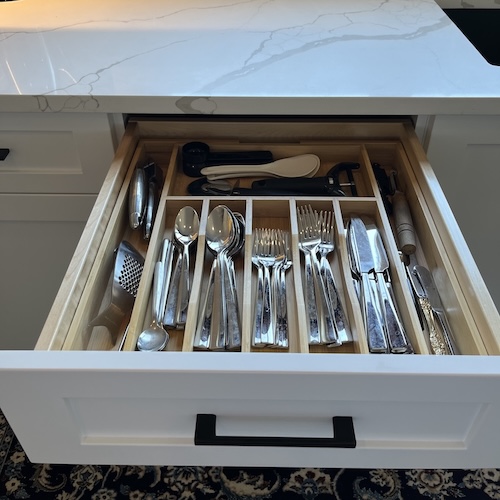
A person with a typical brain will happily open a cabinet, pull out a bin, take off the lid, put an item inside, replace the lid, and close the cabinet. But if a system requires more than one continuous motion, it will often fail for an ADHD brain. Instead of traditional storage with lids, use open-front bins in your pantry and cabinets. These allow you to easily grab an item and put it back without even touching or moving the bin itself.
Or if putting away leftovers requires matching a specific Tupperware bottom to a specific top, the ADHD brain will simply leave food in the pan to go bad. Invest in one uniform set of matching food storage containers to eliminate the frustration of matching bottoms to lids.
The idea is – if it takes more than one motion to put something away, remove the barrier entirely.
Creating a kitchen that works with ADHD brain doesn’t have to feel overwhelming. If you’re ready to take the stress out of daily routines and want hands-on support setting up your space, we’re always here to help.
Contact us today for a free quote, and let’s get your home beautifully organized!