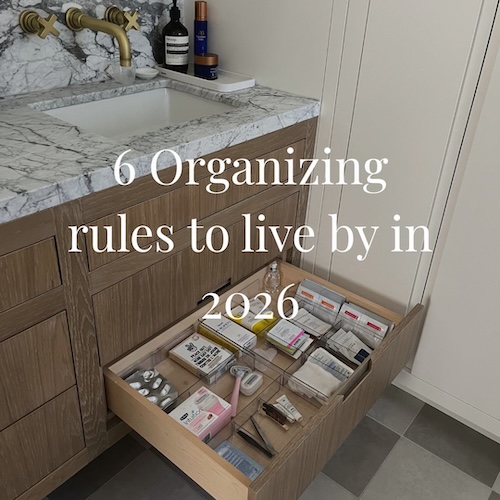
A new year brings fresh energy, and it’s a perfect time to simplify your home. Whether you’re craving less clutter, smoother routines, or just a bit more room, having a few go-to organizing rules to follow can make all the difference. We are sharing simple, sustainable habits that help your home stay functional and calm all year long. Let’s dive into the 6 organizing rules worth living by in 2026.
1. Keep Like With Like—in One Spot
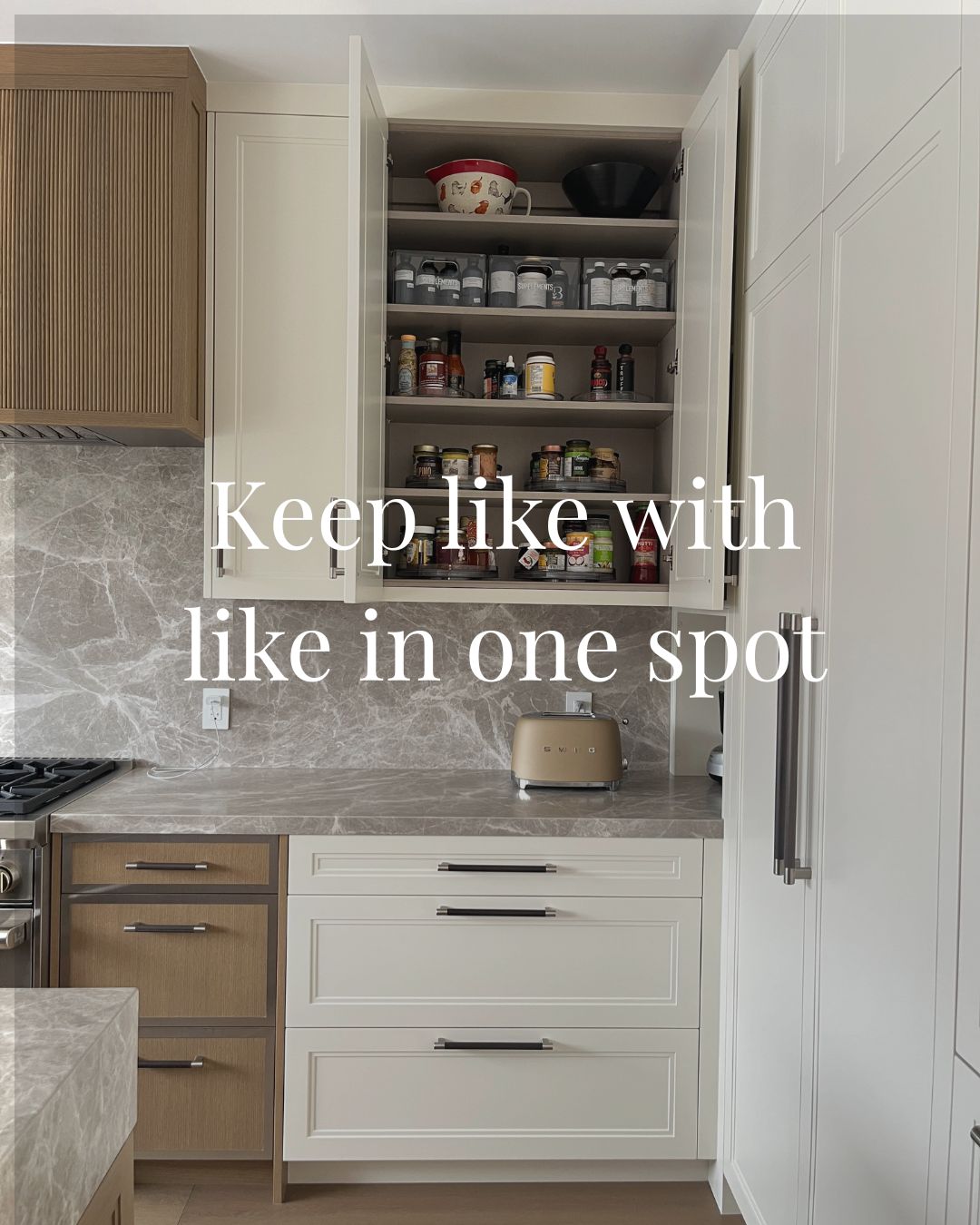
Grouping like items together is one of the most basic organizing rules, but it’s also one of the most overlooked. Most of us know we should keep similar things in the same place, but what often gets missed is the importance of choosing one specific home for each category. When there’s no clear, designated spot for something, it ends up floating all over the house. A great example? Batteries.
In most homes we work in, batteries can be found all around the house: a junk drawer, a kitchen cabinet, a mudroom, a laundry room — all good places to store them, but no one ever knows where to find them, and no one knows where to put them back. This happens with all kinds of everyday items: tools, lightbulbs, tape, medicine, pens. The solution? Pick one smart, central location and keep the whole category there.
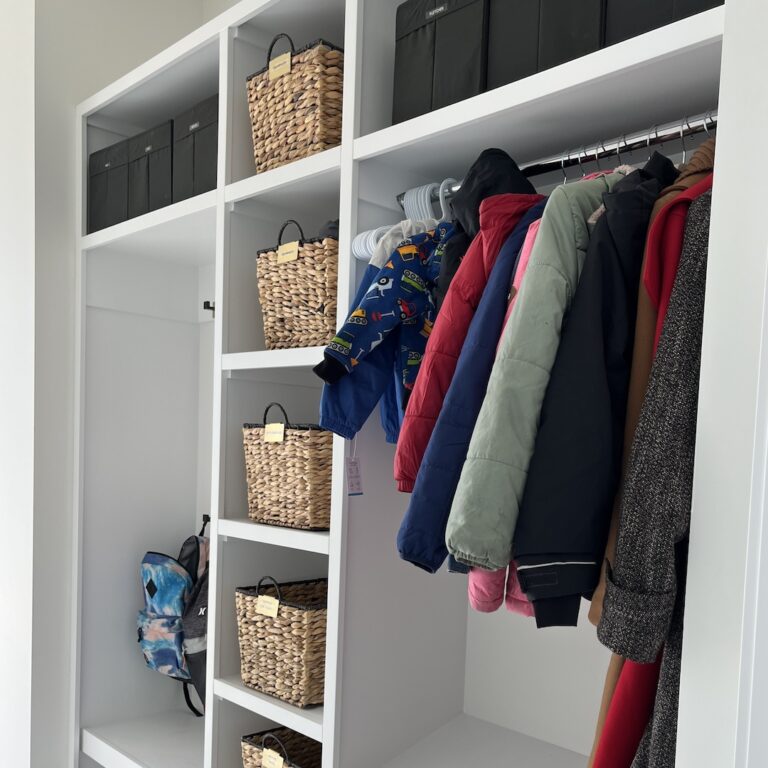
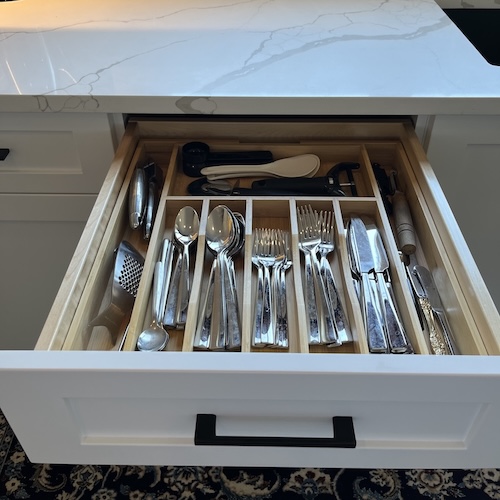
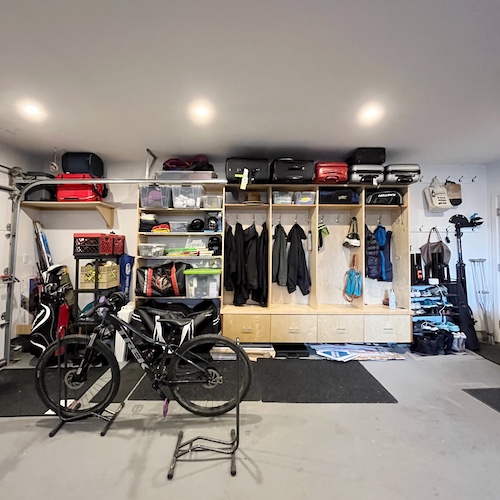
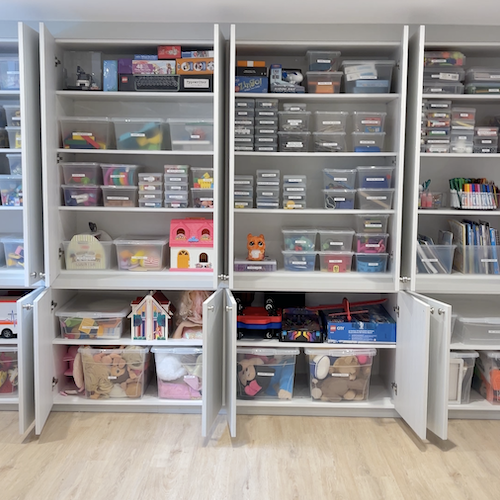
The key is not just keeping like with like, it’s keeping like with like in one place. Choose a spot that makes sense for your space and your routine, assign it as the official home, and contain it using a bin, drawer divider, or basket. Label it clearly. That way, everyone in the household knows exactly where to look and where to return it. When you take the guesswork out of “where does this go?”, systems are much more likely to stick, even in busy households.
That said, there are a few exceptions to this organizing rule. For example, it makes sense to keep extra toilet paper in every bathroom so it’s always within reach. But for things like paper towels, tissues, or napkins, it’s more practical to store them all in one central location, like a utility closet or the top shelf of a pantry. Similarly, while most of us think it’s smart to store cleaning supplies under each sink, we’ve found it’s usually more efficient to keep all supplies together, ideally in the laundry room, mudroom, or under one sink. Then, create a portable cleaning caddy that you can carry from room to room. It’s simple, practical, and prevents you from buying duplicates just because you can’t remember what you already have.
So yes, keep like with like and take it a step further by deciding where it belongs, store it together, and label it clearly. That’s how clutter turns into a system that actually works.
2. Label Everything
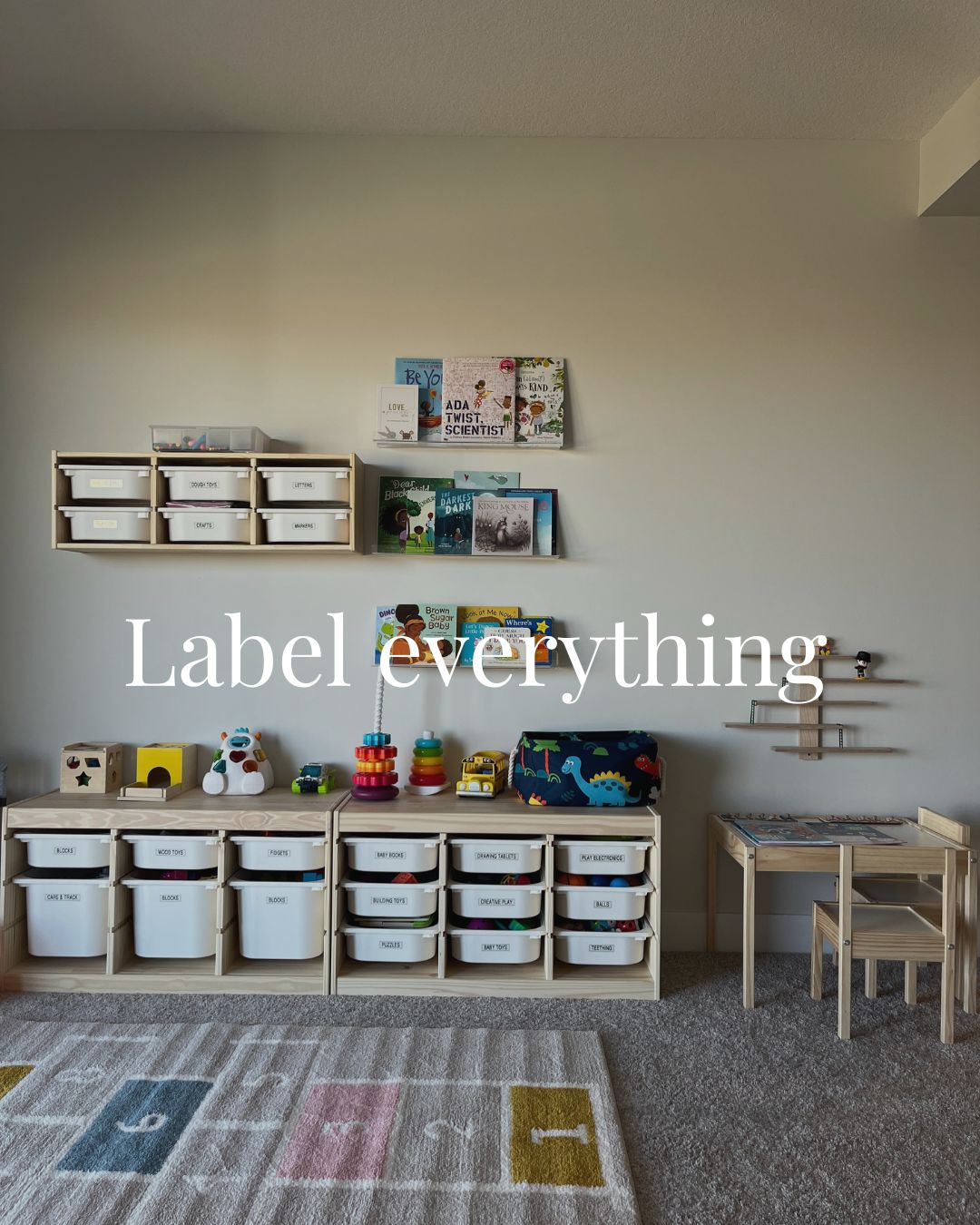
Our second organizing rule is labeling everything. There are few reasons to do this. First of, when things are labeled, your whole household can find and most importantly return items without asking you every time or putting them in a wrong spot. Secondly, when there are labels, there are systems, and even when things get messy during the week, it takes couple of minutes per space to put things back because labels keeps system in place and prevent decision fatigue.
Now, let’s talk about how to label well. We like to use a label maker — it’s quick, simple, and looks polished. Ours is on the fancier side, but there are great ones on Amazon starting at around $30. You can also buy beautiful pre-made labels or use chalk labels if you have nice handwriting. The key is to make sure your labels are cohesive and easy to read. If they’re mismatched or scribbled on masking tape, they can actually make a system feel messier.
Another tip — label categories, not specifics. Think “Snacks” instead of “Granola Bars”, or “Household Items” instead of “Tape, Glue, Felt Pads…” This gives the system flexibility as your items change over time. Whether you’re labeling bins in a pantry, drawers in a bathroom, or containers in a utility closet, the goal is clarity and consistency.
Out of all the organizing rules we use with clients, labeling is one of the simplest to implement, and one of the easiest to maintain. It turns chaos into calm, and makes your space feel more structured without any extra effort.
3. Don’t Overfill Containers
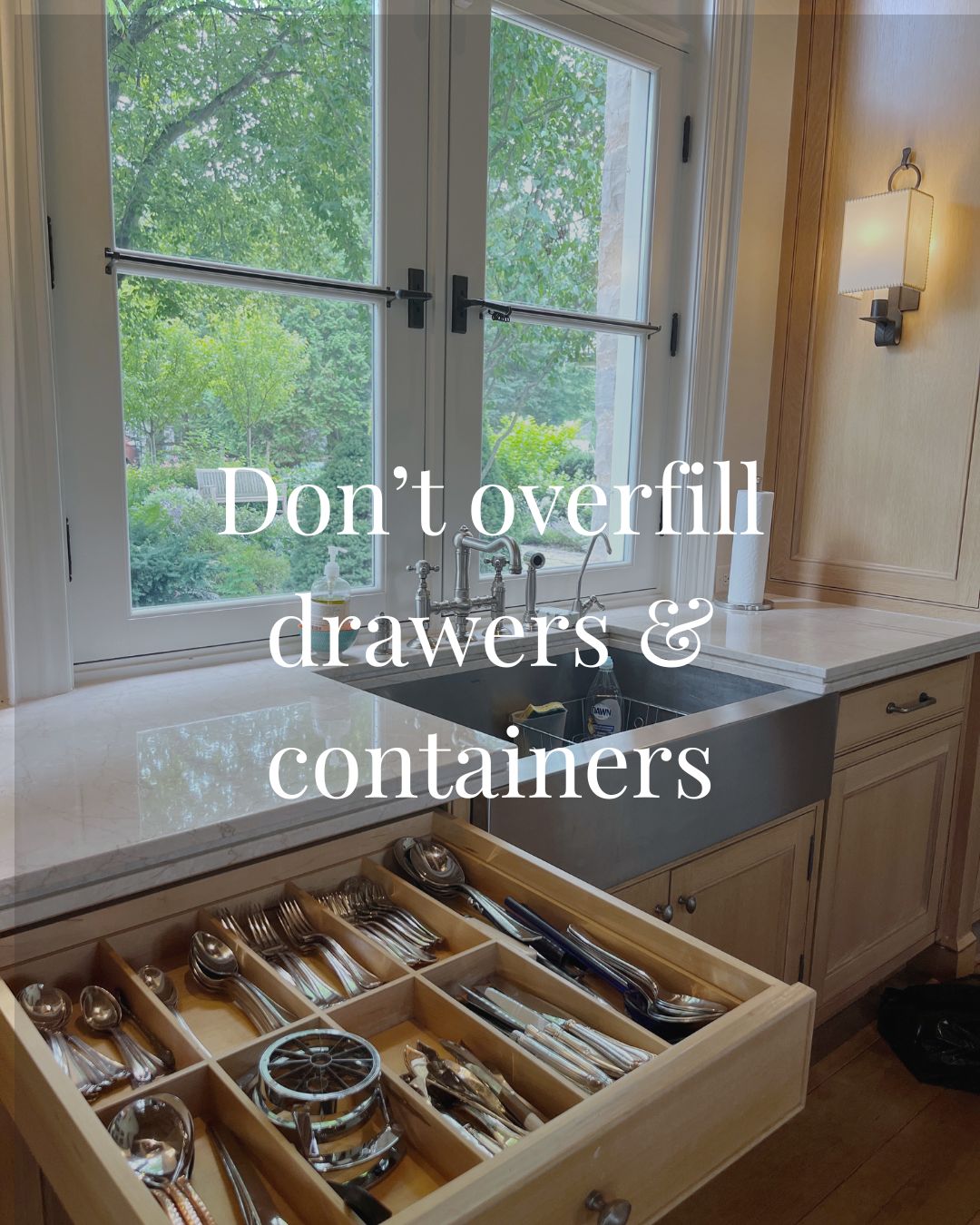
A container is not meant to be a place to cram everything, it’s a boundary. If your bin is overflowing, it’s a sign to edit, not upgrade to a bigger bin.
Follow the “leave room to breathe” rule. A good container should feel about 80% full. If it’s stuffed, it’s time to reassess what actually needs to stay.
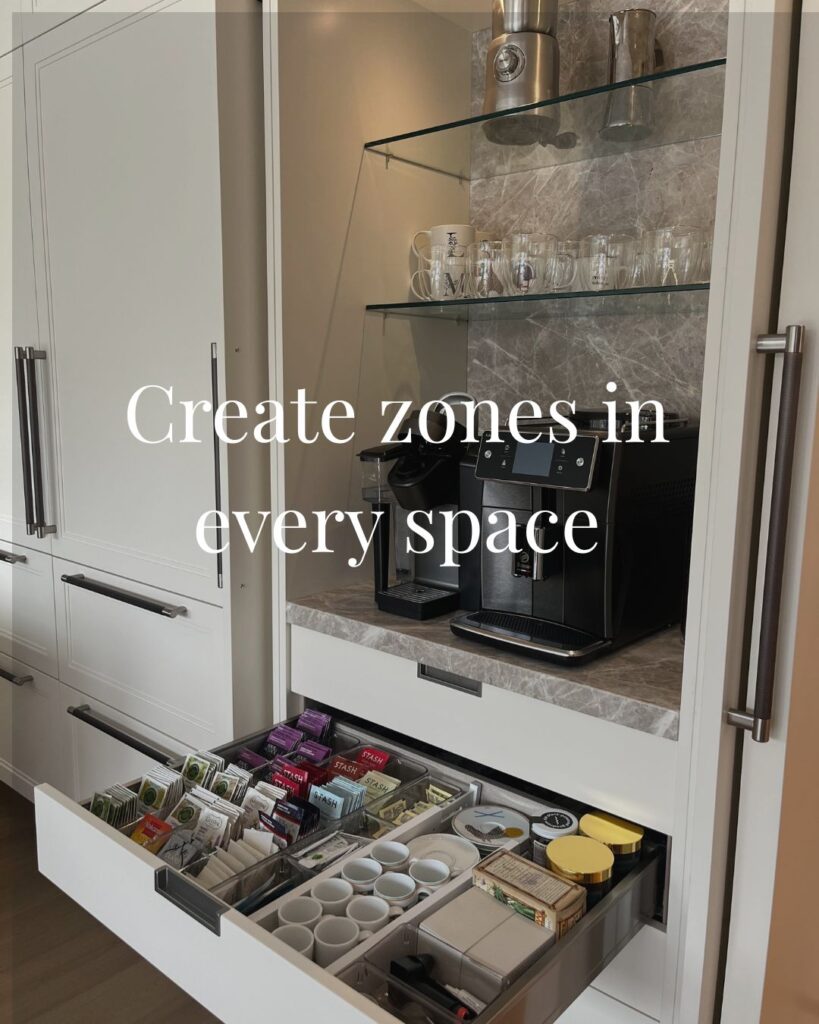
4. Create Zones in Every Space
Zoning brings structure to chaos. Think of zoning as “activity-based organizing.” When everything you need for a specific task is in one spot, you eliminate the friction of searching. Here are the high-impact zones we recommend for every home:
- Kitchen: coffee/tea zone, baking zone, kids’ lunch zone
- Bathroom: daily essentials, first aid, spa zone, back-stock zone
- Entry: drop zone, outbox zone (for items that need to leave the house)
A well-designed zone should allow you to grab what you need with “one touch.” If you have to move three things to get to items you need, your zone isn’t working hard enough for you.
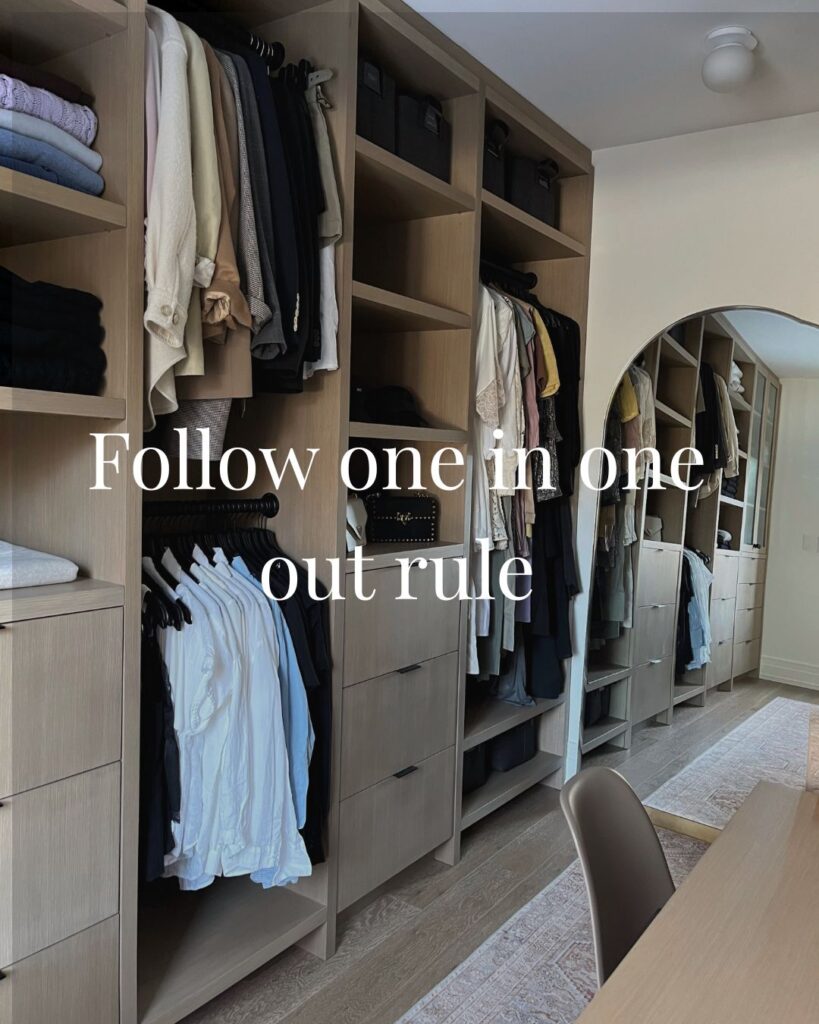
5. One In, One Out Rule
This organizing rule keeps clutter in check without you having to constantly purge. Here’s how it works: every time something new comes into your home, something old has to go. One new pair of jeans? One old pair gets donated. A new kitchen gadget? Let go of the one you haven’t used in a year. It sounds so simple, but this one habit does more to protect your space, your time, and your sanity than any other organizing rule.
The beauty of this rule is that it forces you to think before you buy. Over time, it starts to influence your shopping habits in the best way. You pause before clicking add to cart, because you know that bringing something in means letting something else go.
I’ve noticed a clear pattern with clients who struggle to maintain organization: they’re constantly bringing in new items. A package on the doorstep every day. And while the actual organizing might be done beautifully, the system can’t keep up with the volume. It becomes a cycle of chaos. This rule breaks the cycle before it starts.
And let’s talk about free merch for a second. Those tote bags, mugs, t-shirts, water bottles you didn’t even want. With this rule, you kind of don’t have a choice anymore. Taking that free thing means something else has to go. Most of the time, it’s just not worth it.
The One In, One Out policy saves you from the constant effort of decluttering and re-organizing because it prevents the clutter in the first place. Keep a donation bin somewhere easy to access, like in your closet, the laundry room, or even the garage. That way, when something new arrives, you can immediately follow through.
Out of all the organizing rules, this is the one that truly changes habits long-term. It saves you money, reduces the time you spend managing stuff, and creates more breathing room in your home. Try it for one month and see what shifts.
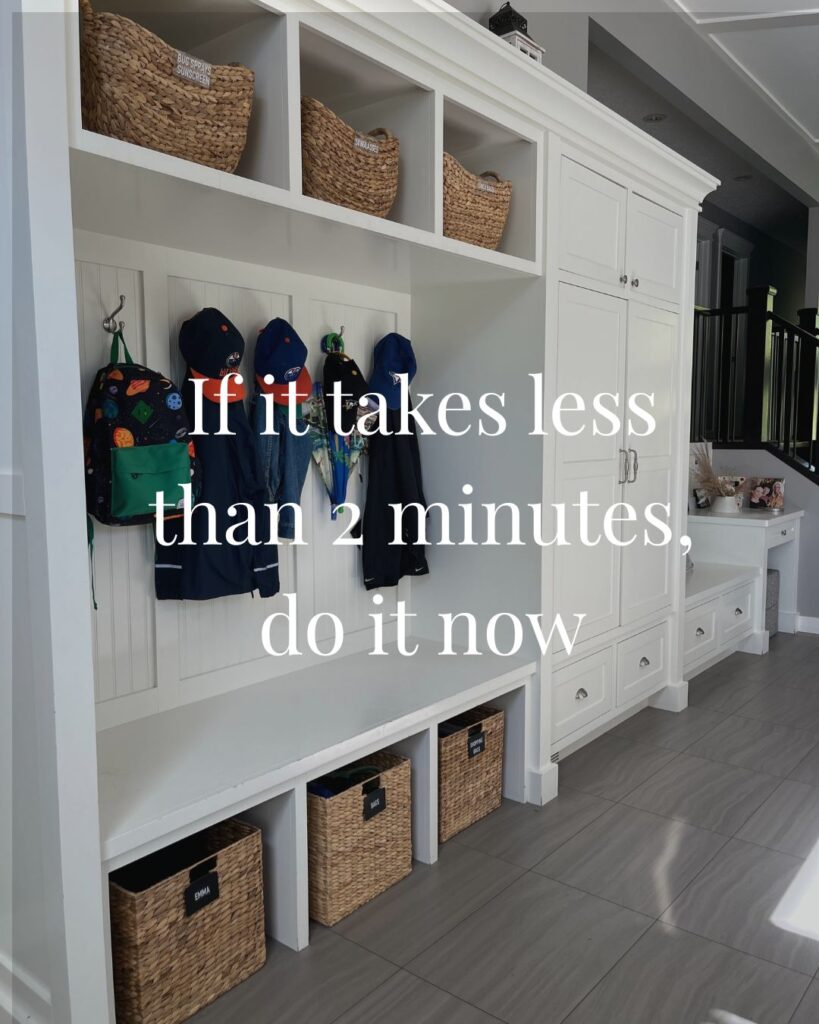
6. If It Takes Less Than 2 Minutes, Do It Now
This organizing rule is simple, but powerful. If something takes less than two minutes, do it right now. Most clutter isn’t the result of big messes. It’s the little things left undone: mail that didn’t get sorted, dishes left in the sink, shoes that weren’t put away, receipts stuffed in a drawer. Individually, they take seconds. Together, they add up to a home that feels chaotic and heavy. This rule keeps those little messes from turning into big ones.
So what actually falls into the “less than 2 minutes” category? Here are some ideas:
- Tossing junk mail as soon as you bring it in
- Putting your shoes back in the closet, not by the door
- Wiping down a counter after making lunch
- Refolding a towel that slid off the rack
- Putting one dish in the dishwasher instead of the sink
- Hanging up your coat instead of throwing it on a chair
- Breaking down an empty Amazon box and taking it to recycling
- Putting pens back in the drawer after homework or journaling
- Refilling the soap dispenser when you notice it’s low
- Tossing expired food when you spot it in the fridge
None of these tasks will dramatically change your home on their own, but doing them consistently will. They prevent clutter from building and eliminate the need for big cleanups later. And because they’re so quick, they rarely interrupt your day.
Final Thoughts
The truth is, staying organized doesn’t come from one big weekend makeover. It comes from small, consistent habits that make daily life feel lighter. These 6 organizing rules aren’t about perfection, they’re about creating systems that work with your real life, in a real home, with real people. Start with one or two rules that feel manageable, and build from there. The more you practice them, the more second-nature they become.
If you’re ready for your next step, check out our post on 3 Low-Effort Decluttering Habits to Keep Your Home in Order. It’s 3 simple routines that take just minutes a day but make a big difference over time.